
SMP vs. Hair Transplant: Which One Is Right for You? (2026)
A hair transplant moves your own hair. Scalp micropigmentation recreates the look of it. Here is an honest comparison of cost, downtime, results and who each one actually suits — including when combining both makes the most sense.
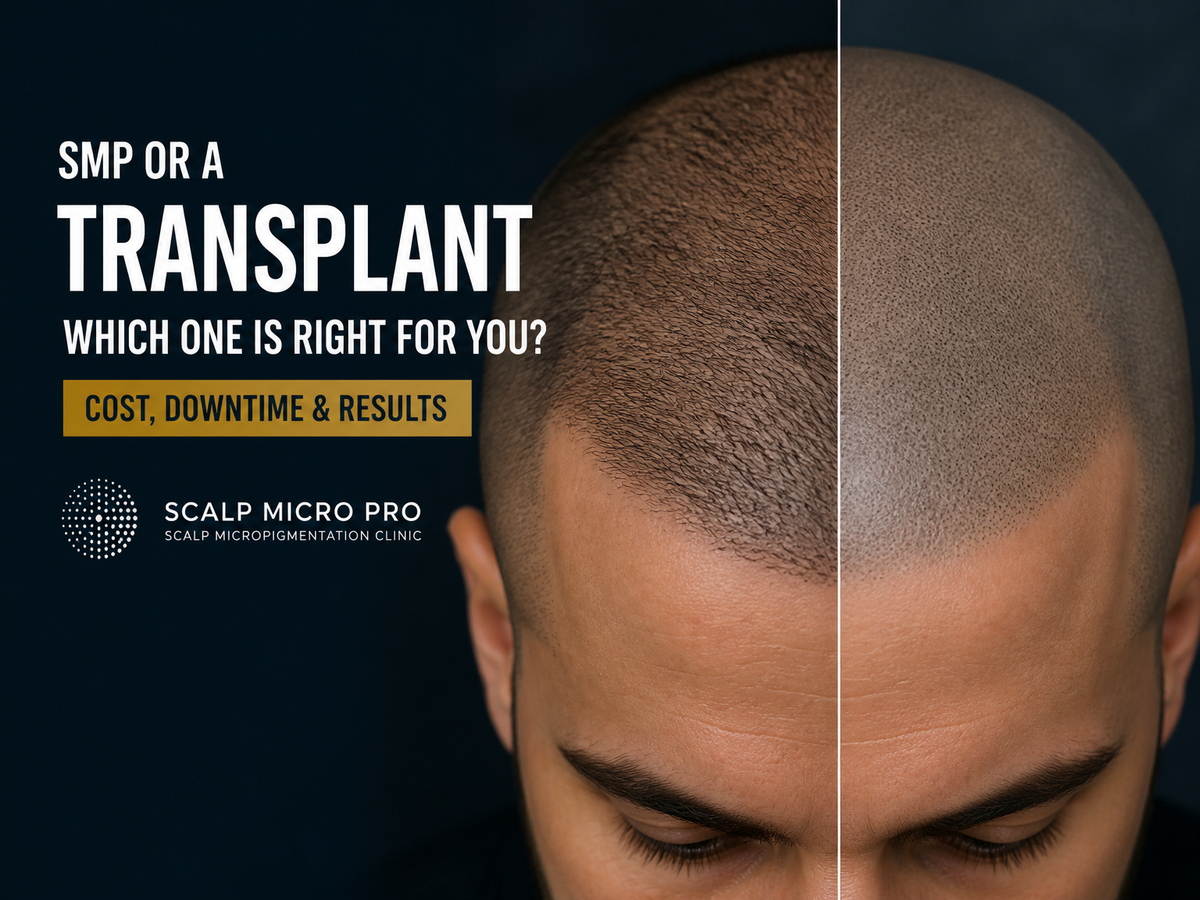
Most people arrive at this comparison the same way. You have been reading for weeks, you have seen the transplant clinics with the 12-month timelines and the five-figure quotes, and then you found something called scalp micropigmentation that costs a fraction of it and promises results in a few weeks. It sounds too easy. So which one is real?
Both are. They just do fundamentally different jobs, and the right answer depends on how much hair you have, what you want your head to look like, and how you feel about surgery.
The difference, in one sentence
A hair transplant relocates hair follicles you already own. Scalp micropigmentation deposits pigment in the upper layers of your scalp to recreate the appearance of hair follicles.
That is the whole thing. A transplant gives you more hair. SMP gives you the look of more hair. Everything below follows from that.
- Transplant: surgical, grows your own hair
- SMP: non-surgical, recreates follicle appearance
- Transplant: final result at 9–12 months
- SMP: visible change after session one
- Transplant: hair you can grow out
- SMP: best with hair kept short or shaved
How a hair transplant works
A surgeon harvests follicles from the back and sides of your head — the donor area, where hair is genetically resistant to loss — and implants them into the thinning or bald areas. FUE removes follicles one at a time; strip harvesting (FUT) takes a thin band of scalp and leaves a linear scar.
The transplanted hair sheds within a few weeks. This alarms people who were not warned about it. The follicle survives, goes dormant, and starts producing hair again a few months later. You are looking at roughly 9 to 12 months before you see what you actually paid for.
How SMP works
An SMP artist deposits thousands of individual pigment impressions across the scalp with a specialized needle and pigment formulated for the scalp — not tattoo ink, and not at tattoo depth. Each impression is matched to the size, color and density of your natural follicles.
The result is built over 2 to 4 sessions spaced a few weeks apart, so density can be layered gradually and adjusted between visits. There is no surgery, no incision and no donor area involved.
Cost
This is usually the deciding factor, so here it is plainly.
Transplant pricing is generally driven by graft count, and full-scalp cases run into five figures. SMP is priced by the area covered and the number of sessions your plan needs, and it is a fraction of that for the same real estate. Financing is common for both.
There is a second cost worth naming: time off. A transplant means days away from normal life and months of looking like you are in progress. SMP means a few days of light aftercare between sessions.
Downtime and recovery
Transplant. Swelling, scabbing in the recipient area, a sore donor area, and specific sleeping and washing rules for the first couple of weeks. Most people take at least a week where they would rather not be seen.
SMP. The scalp looks red and the dots look darker and sharper than the final result for the first few days. That fades. The real restrictions are practical: no heavy sweating, no swimming, no direct sun and no scrubbing for about a week after each session.
Who each one is actually for
A transplant makes more sense if you want to grow your hair to a real length, have a strong donor area, are filling a defined zone like a receding hairline or temples, and can wait a year for the payoff.
SMP makes more sense if you are comfortable wearing your hair very short or shaved, want a defined result in weeks rather than a year, have limited donor supply, do not want surgery, or want the crisp buzzed look rather than length.
When SMP and a transplant work together
They are not competing options for everybody. Two combinations come up constantly:
- Density between grafts. A transplant covers the area but the result reads thin because the graft count could not match your original density. SMP fills the gaps behind the hair, killing the scalp-shine contrast and making the same grafts read fuller.
- Donor scar camouflage. Strip scars and dotted FUE donor areas show through short hair. SMP is one of the most reliable ways to break up that contrast so you can wear a shorter cut again.
If you already had a transplant and are unhappy with the density, that is one of the most satisfying uses of SMP there is.
Four questions that decide it for most people
- Do I want to wear my hair long? If yes, that points to a transplant. SMP looks its best short.
- How do I feel about surgery? If the answer is "I would rather not," you have your answer.
- What is my real budget — including a second transplant later? Loss continues; graft supply does not.
- How soon do I need to look like myself again? Weeks versus a year is not a small difference.
Final thoughts
There is no universally better option, and anyone telling you otherwise is selling one of them. A transplant is the right call for real length and a strong donor area. SMP is the right call for a sharp, defined look without surgery, on a budget and a timeline that most people can actually live with — and it is often the finishing step that makes a transplant look the way you hoped it would.
The fastest way to know which one you are is to have someone look at your scalp in person and tell you honestly. Bring your questions and ask for both answers.
Frequently asked questions
Ready to see if SMP is right for you?
Free consultation · No pressure · Straight answers from a specialist.
New guides, straight to your inbox
Occasional, no-spam emails with new SMP guides, before & afters and the odd consult opening. Unsubscribe anytime.