
What SMP Looks Like at Day 1, Week 1, Month 1 and Year 1
SMP changes a lot in the first month, and almost all of it is supposed to happen. Here is what your scalp will look like at each stage — from the sharp, dark first day to the soft, settled result you live with for years.
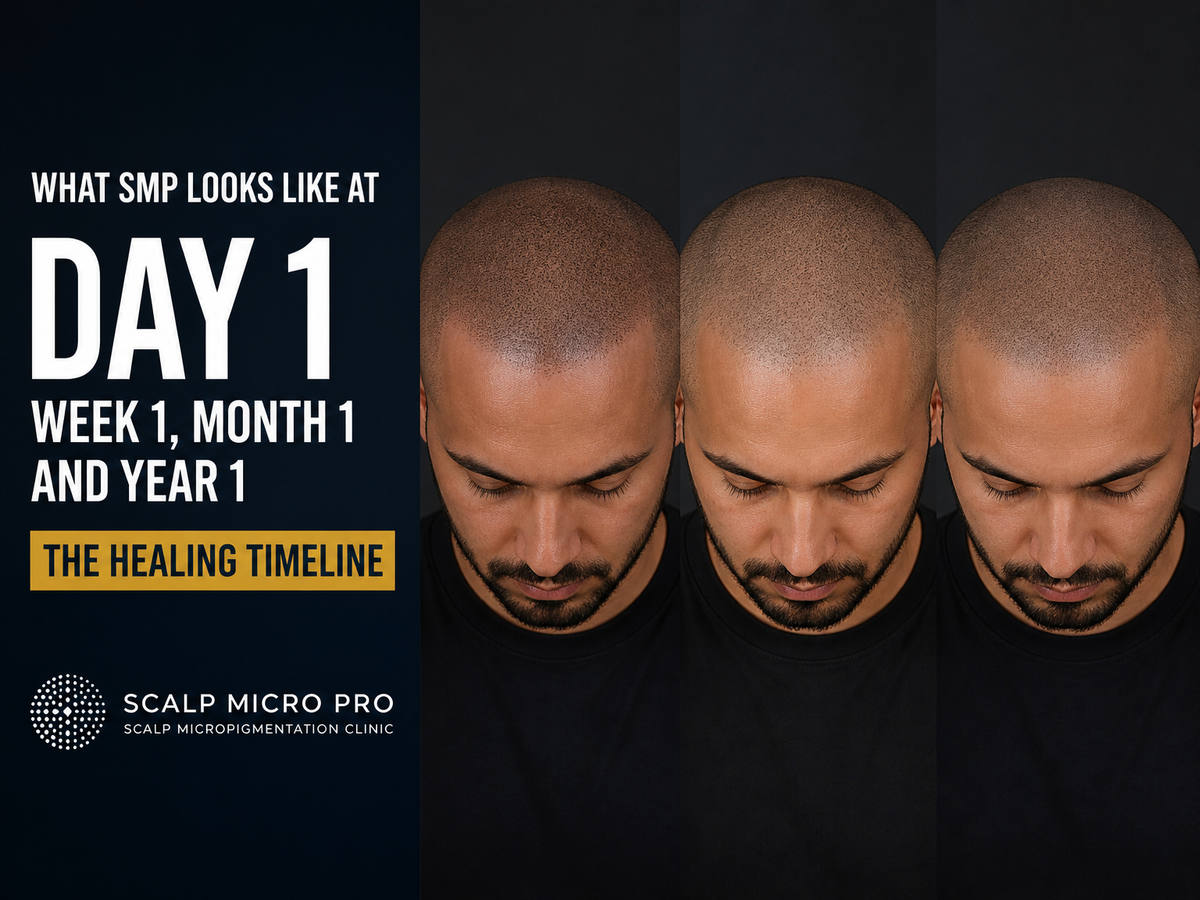
The hardest part of SMP for most people is not the needle. It is the mirror in the first two weeks. The result changes almost daily, and if nobody told you what to expect, every change looks like a problem.
This is the timeline we walk every client through. Your skin, your shade and your plan shift the details, but the shape of it is the same for nearly everyone.
Day 1: darker and sharper than it will ever look again
You leave the studio with a scalp that is visibly red and impressions that look bold, dark and very defined. Some people love it in the car. Some people panic in the car. Both reactions are describing the same normal thing.
Two things are happening. The skin around each impression is inflamed, which makes the contrast look higher. And there is pigment sitting near the surface that has not settled yet and will not all stay.
What to do: nothing. Keep it dry, keep your hands off it and stay out of the sun. Our first-30-days aftercare guide covers the specifics.
Days 2–4: redness fades, dots stay bold
The redness usually calms within a day or two. What is left is a crisp, even pattern that still reads darker than natural stubble. Your scalp may feel tight and a little itchy. That is normal and it passes on its own.
Week 1: the first softening
Toward the end of the first week the impressions begin to soften at the edges and lose some of their day-one intensity. Very light flaking is common. Let it come off by itself — picking at it takes pigment with it.
This is usually when people start going out again without thinking about it. From a normal conversational distance, the scalp already reads as shaved hair rather than as something that was done.
Weeks 2–3: the lighter phase
This is the stage nobody warns you about properly. Between about day 7 and day 21 the result often looks noticeably lighter than it did in week one, and sometimes lighter than you wanted.
That does not mean something went wrong. The skin is finishing its healing over the impressions and the surface pigment is clearing. What you see through healed skin is softer by design.
Week 4: what the session really gave you
At about four weeks the skin has settled and you are looking at the honest result of that session — the true shade and the true density.
This is when the next session happens. With a healed first layer to work from, your artist adds density where it is thin, adjusts the shade if your skin pulled it lighter or cooler than planned, and refines the hairline. Later sessions are usually faster and heal more gently.
- Density added where the first layer is thin
- Shade adjusted to how your skin held pigment
- Hairline edges refined
- Uneven patches blended
Months 2–3: the finished result
Once your final session heals, you have the result you will actually live with. For most treatments that lands around two to three months after the first appointment, depending on how many sessions your plan needs and how they were spaced.
The finished scalp reads as a close shave: individual impressions varied in size and tone the way real follicles are, a hairline that fades naturally instead of stopping in a hard line, and no visible pattern.
Year 1 and beyond
At a year, a well-done result looks the same as it did at month three, just very slightly softer. That softening is gradual and even — it is how scalp pigment is meant to age.
Over several years the impressions slowly lighten. A maintenance session brings the contrast back. How long you go before needing one depends mostly on sun exposure, skin type and whether sunscreen became a habit.
What is not normal at any stage
- Impressions that blur into each other or spread after they have healed.
- Pigment that turns blue or green instead of staying in the gray-black family.
- Redness, swelling or tenderness that increases after the first few days instead of calming down.
The first two usually point to pigment placed too deep or the wrong pigment, and they are why you should always ask to see healed work — not day-one photos — before booking anywhere. The third is a reason to call us right away.
Final thoughts
The first month is a moving target, and it is supposed to be. Dark, then lighter, then settled, then refined. If you know the curve before you start, week two stops being scary and becomes exactly what it is: the halfway point.
If you want to see this progression on real heads, ask to see healed before-and-after photos at your consultation, including ones taken a year or more after treatment.
Frequently asked questions
Ready to see if SMP is right for you?
Free consultation · No pressure · Straight answers from a specialist.
New guides, straight to your inbox
Occasional, no-spam emails with new SMP guides, before & afters and the odd consult opening. Unsubscribe anytime.