
SMP for Women: Adding Density to Thinning Hair and Widening Parts
Scalp micropigmentation is not just a shaved-head treatment. For women with thinning hair, a widening part or a see-through crown, SMP adds density underneath the hair you already have — no shaving, no surgery. Here is how it works and who it suits.
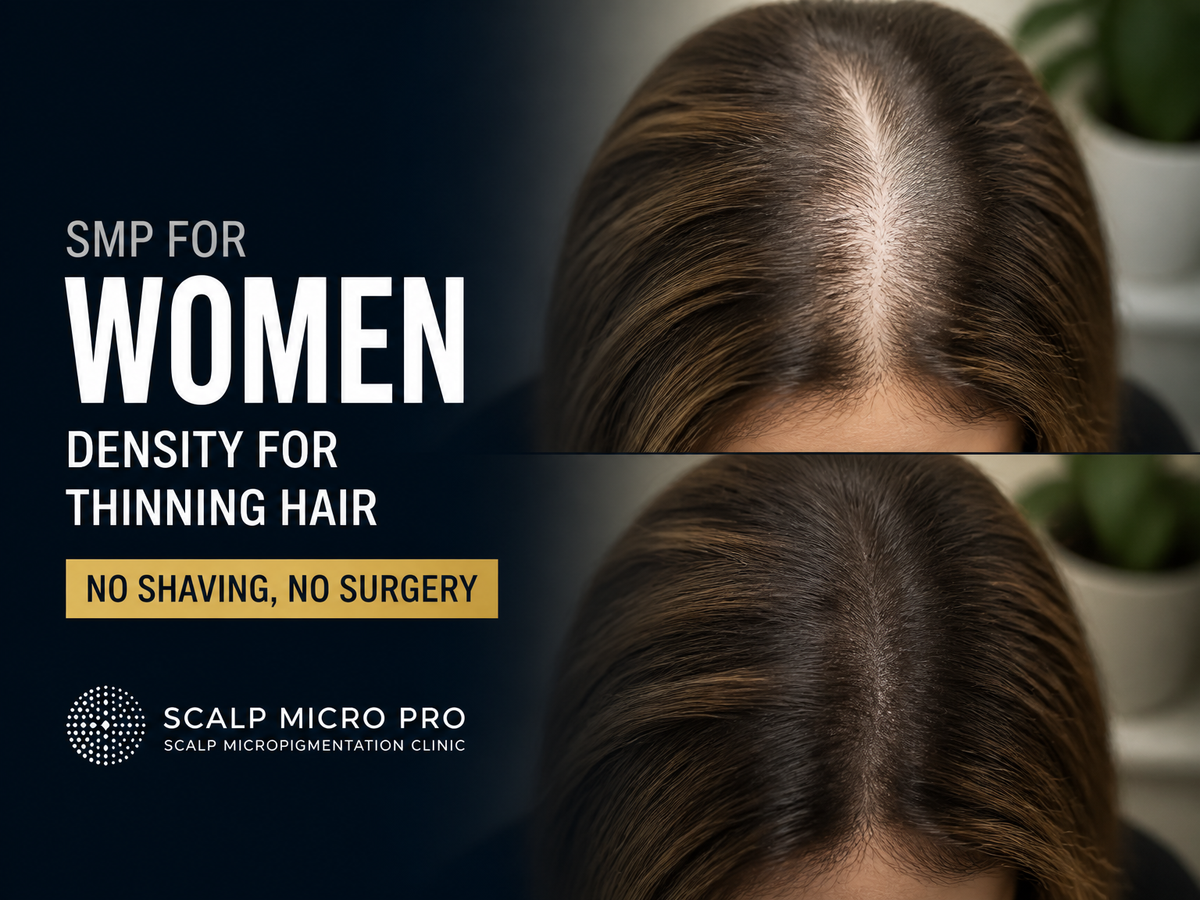
Most of what you see online about SMP is men with shaved heads, so it is understandable if you assumed it is not for you. It is — it is just applied differently.
For women, SMP is almost never about recreating a shaved look. It is about the scalp showing through: the part that has been getting wider, the crown that shows under bathroom lighting, the spot you have started styling around. SMP places tiny impressions of pigment under your hair so there is less contrast between hair and scalp, and the hair you have looks fuller.
How it works on longer hair
Hair looks thin mainly because of contrast. Dark or medium hair over a pale scalp makes every gap obvious. SMP softens that contrast by placing small, root-colored impressions on the scalp in the thinning areas.
Your hair stays exactly as long as it is. Nothing is shaved. The area is parted and treated section by section, and once it heals the pigment sits under your hair where it reads as shadow and density, not as dots.
Who it suits
SMP for density works best on diffuse thinning — hair that is still there but has become sparse — rather than on completely bare areas that would need to look like hair at length.
- A part that has widened over time
- A see-through crown
- Thinning at the hairline and temples
- Scars from surgery or injury under the hair
- Thinning after pregnancy or with age, once stable
- Areas you style around every morning
Find the cause first
This matters more for women than for almost anyone else we see. Female hair loss has many possible causes — hormonal changes, thyroid conditions, iron or vitamin deficiencies, stress, certain medications, pregnancy, tight hairstyles, or conditions such as alopecia areata.
Some of those are treatable and some are temporary. SMP does not treat any of them. It changes how the scalp looks.
Shade matching on longer hair
With a shaved head, the artist matches the pigment to stubble. With longer hair, the pigment is matched to your roots — the color closest to the scalp — because that is what the impressions sit next to.
If you color your hair, we match to your natural root color and talk through how that will look if you go lighter or darker later.
Very light blonde, red and fully gray hair have less contrast with the scalp to begin with, so thinning is often less visible and SMP has less to correct. That does not mean it cannot help, but it is a conversation to have honestly at the consultation before committing.
Sessions, comfort and recovery
Density work for women usually takes 2 to 3 sessions spaced a few weeks apart. Each session builds a little more density, so the change is gradual and you decide how far to take it.
Most clients describe the sensation as mild discomfort rather than pain. Recovery is the same as any SMP session: keep the scalp dry and out of the sun for the first few days, avoid heavy sweating for about a week, and hold off on hair color and chemical treatments until your treatment is finished.
Can you still color and style your hair?
Yes, with some timing. Wait until your full treatment is finished and healed before coloring, and keep bleach and strong chemical treatments away from the scalp where you can. Normal styling, blow-drying and heat tools on the hair itself are fine once you have healed.
Final thoughts
If you have been parting your hair differently, wearing it up less, or dreading bright bathroom lighting, SMP is worth a conversation. It does not grow hair and it does not replace medical care for the cause of your hair loss, but it can take the scalp out of the picture — quietly, and without anyone knowing what changed.
The consultation is private and there is no pressure to book. Come with your hair styled the way you normally wear it, so we can see exactly what you see.
Frequently asked questions
Ready to see if SMP is right for you?
Free consultation · No pressure · Straight answers from a specialist.
More from the journal
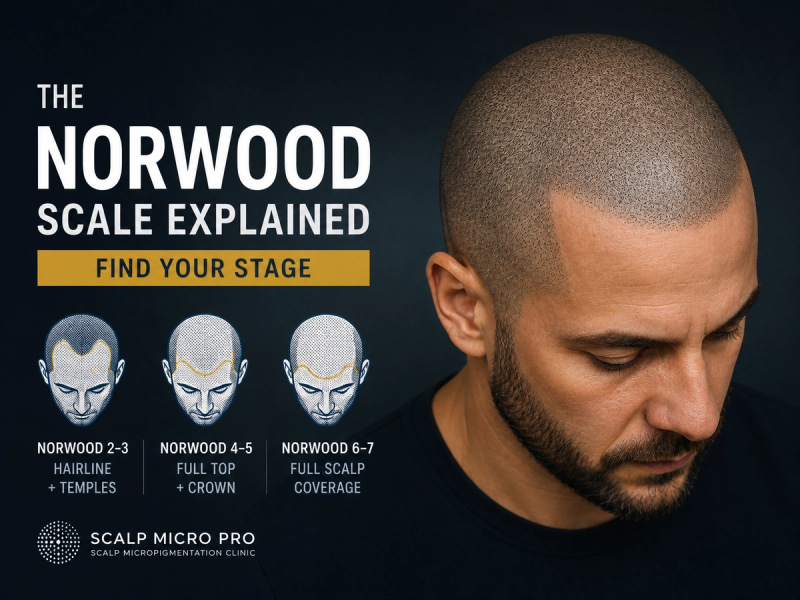
The Norwood Scale Explained: Where You Are and What SMP Can Do
The Norwood scale is the chart doctors and SMP artists use to describe male hair loss, from a slightly receding hairline to a fully bald top. Here is how to find your stage, what each one means, and what SMP typically looks like at every point on the scale.
Read more · 5 min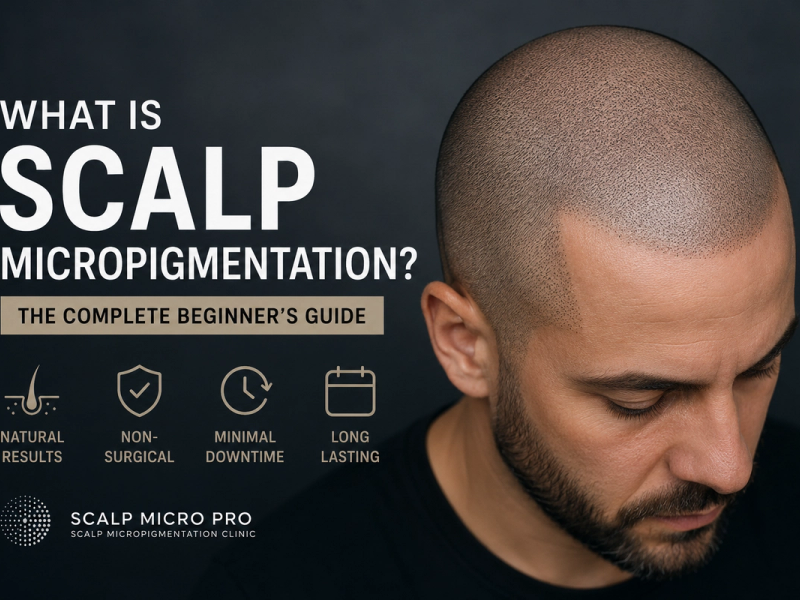
What Is Scalp Micropigmentation? The Complete Beginner's Guide (2026)
Scalp Micropigmentation (SMP) is a non-surgical hair loss solution that creates the appearance of fuller hair using specialized pigments. Learn how it works, who it's for, how long it lasts, and what results you can expect.
Read more · 8 minNew guides, straight to your inbox
Occasional, no-spam emails with new SMP guides, before & afters and the odd consult opening. Unsubscribe anytime.